Understanding O-Ring Specifications for Watermakers
Selecting the correct O-ring is crucial for the efficient and leak-free operation of your Watermakers Inc. system. O-rings act as seals, preventing water from escaping at connection points and ensuring the integrity of the reverse osmosis process. Different parts of the watermaker system require specific O-ring sizes and materials to withstand varying pressures and chemical environments.
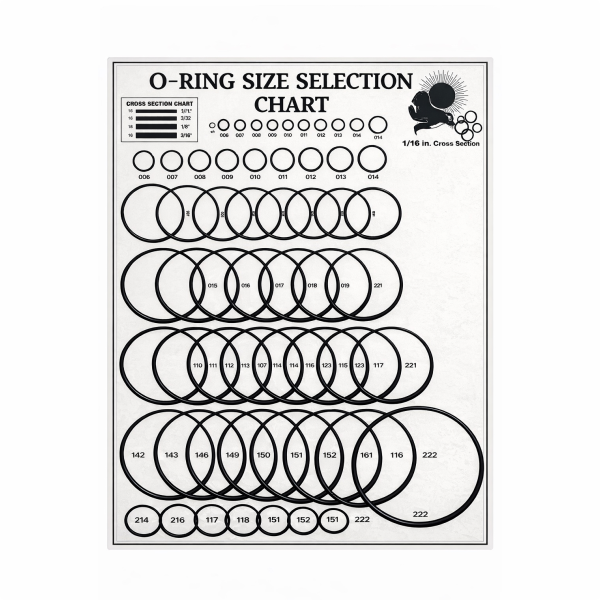
The product codes, such as OR-011-7470 or OR-112-EP, often indicate the specific dimensions and material composition of the O-ring. For instance, the "EP" designation might refer to a specific elastomer compound suitable for particular applications, while the numerical part denotes its size. Consulting your watermaker's manual or contacting Watermakers Inc. directly can help you identify the exact O-ring needed for a particular component, ensuring optimal performance and longevity.
Importance of O-Rings in Watermaker Maintenance
O-rings are small but vital components in any watermaker system, playing a critical role in preventing leaks and maintaining system pressure. Regular inspection and replacement of O-rings are essential for routine maintenance, ensuring that your reverse osmosis desalination system continues to operate at peak efficiency and reliability. Worn or damaged O-rings can lead to reduced water output, increased energy consumption, and potential damage to other system components.
The variety of O-rings offered by Watermakers Inc., identified by codes like OR-016-7470 and OR-115-7470, reflects the diverse needs of different watermaker parts and applications. These O-rings are designed to meet specific sealing requirements, whether for high-pressure membrane housings, filter canisters, or pump connections. Proactive replacement of these inexpensive parts can prevent costly repairs and downtime, making them a cornerstone of effective watermaker upkeep.